 MEMBERSHIP LOGIN
 JOIN PRI
Wellness Check: Improving Driver Safety
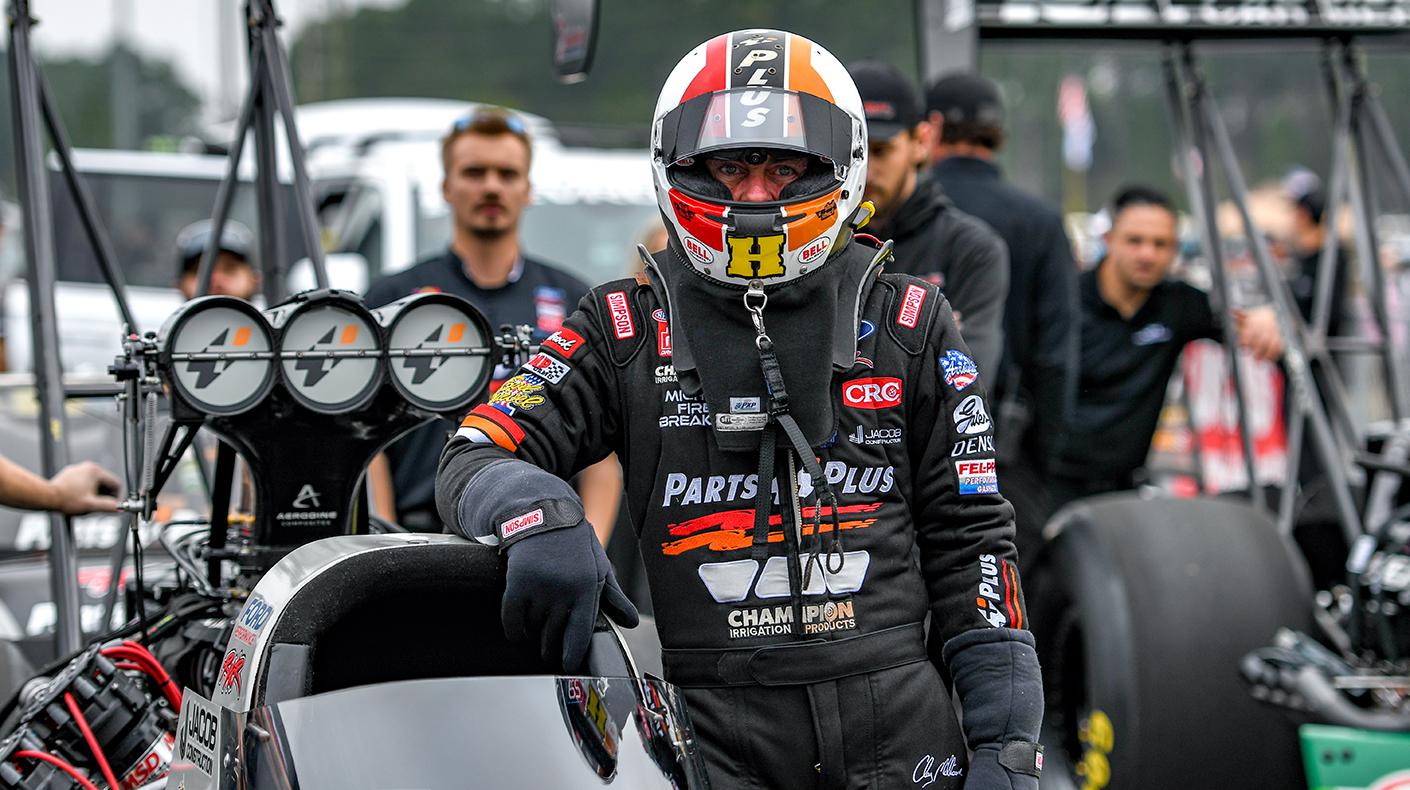
The gravitational pull that the annual PRI Show exerts on the racing community draws a number of competition-related conferences and seminars to Indianapolis every December. Among them is the International Council of Motorsport Sciences (ICMS) Annual Congress.
"It's two great days of incredible presentations, case studies, and panels," said Tom Weisenbach, the ICMS's executive director. "Leading experts from around the world come to discuss how we can improve safety and medical care. The Annual Congress attendees like discussing how we can make our cars better. Not necessarily faster, but safer."
Weisenbach said the topics for each year's Congress are based on feedback the ICMS receives from the previous gathering. What they heard after the 2024 Congress was a desire to learn more about subjects that don't always get top billing when racing safety is discussed--things like concussions, hearing loss, and overall driver health. So the 2025 Congress included presentations and roundtable discussions with physicians and other health professionals, university professors, race track medical directors, and even drivers to discuss the latest research findings and treatments for these sometimes overlooked conditions.
During the run-up to the Congress, we spoke with several of the panelists about how the racing community continues to improve ways to protect drivers (and their crew).
Concussion
"Sanctioning bodies are taking a much more serious look at drivers who make contact with a wall," Weisenbach said. "They're doing a much better job of doing basic tests at the track to see if the driver may be concussed."
"IndyCar is probably at the forefront in the different ways that we measure or proactively look at our drivers to try and avoid concussion, in the different diagnostic tools that we use to identify concussions early, and then in the use of tools to assist our drivers to get back in the cars," said Dr. Melissa McCarthy. An assistant professor at the Indiana University (IU) School of Medicine and an emergency medicine physician at the IU Methodist Hospital, McCarthy is also part of a team of doctors and other safety personnel who travel with IndyCar.
"The unique thing about IndyCar is, we have the same physicians at every race," she said. "We get to know the drivers pretty well over time, so we can identify when someone's just not acting right." That familiarity is reinforced by baseline tests of each driver's neurocognitive functions that the doctors perform during the drivers' annual physicals.
Concussions in motorsports are very different than those sustained in sports like football or soccer, McCarthy pointed out. "Those concussions are more like impact injuries. Our drivers experience significant G forces when they have a crash, but they may be more rotational versus a head impact injury. I'm referring to the spinning and the flipping that can cause diffuse axonal injury in the brain."
For those of us who don't speak medicine, she explained, "Imagine your brain is a big spider web. You have all these little neurons that connect your brain to your skull. When you have significant G forces in a spinning or rotational axis, many of those can break, and that's the diffuse axonal injury."
Mitigating the risk of concussion requires "a combination of multiple things," McCarthy said. "In the car, we do as much as we can to limit head movement. We have the head surround in the car, which plays a key role in protecting our driver's head movement. We have the helmets and the HANS devices."
Among the diagnostic tools IndyCar uses to predict concussion in the wake of an accident is an accelerometer that the drivers wear in their earpieces. "We can look, in six axes, at their velocities and G forces when they have an incident." McCarthy said IndyCar has also started a trial in which the drivers wear a small gyroscope in their ears "to measure what their head is actually experiencing and what that rotational energy is."
Fortunately, "we don't have that many concussions every year," McCarthy added. For those who do suffer a concussion, IndyCar takes a "step-wise approach" to recovery that starts with a period of rest and evolves into "a period of light activity, and then more rigorous activity. Some of that is physical training to get them back to the level they were. We also want to see them perform in a simulator-type environment."
To read the full article, plus hundreds of other articles like it, for free, sign up for a digital subscription to PRI Magazine on Zinio here.
Once you download the Zinio mobile app or are logged into Zinio on a desktop browser, you will gain immediate access to more than a year's worth of content, including this article here and additional coverage in the March/April 2026 issue here.